Why Is My Sidewalk Creating Trip Hazards?
A lip between two sidewalk panels doesn't just look bad — over roughly a quarter inch it's an ADA-recognized trip hazard and a real liability. Here's why it happens, when it becomes a legal issue, and how to fix it without replacement.
Free On-Site Estimate · Serving Spokane & the Inland Northwest
Problem overview
What's actually happening.
Trip hazards form when adjacent sidewalk panels stop sitting flush — one lifts, one drops, or one rocks. All three are the result of what's happening under the concrete, not on top of it.
In Spokane and Spokane Valley, homeowners are typically responsible for maintaining the sidewalk that fronts their property. That means the trip hazard on the panel by your mailbox is legally yours to fix.
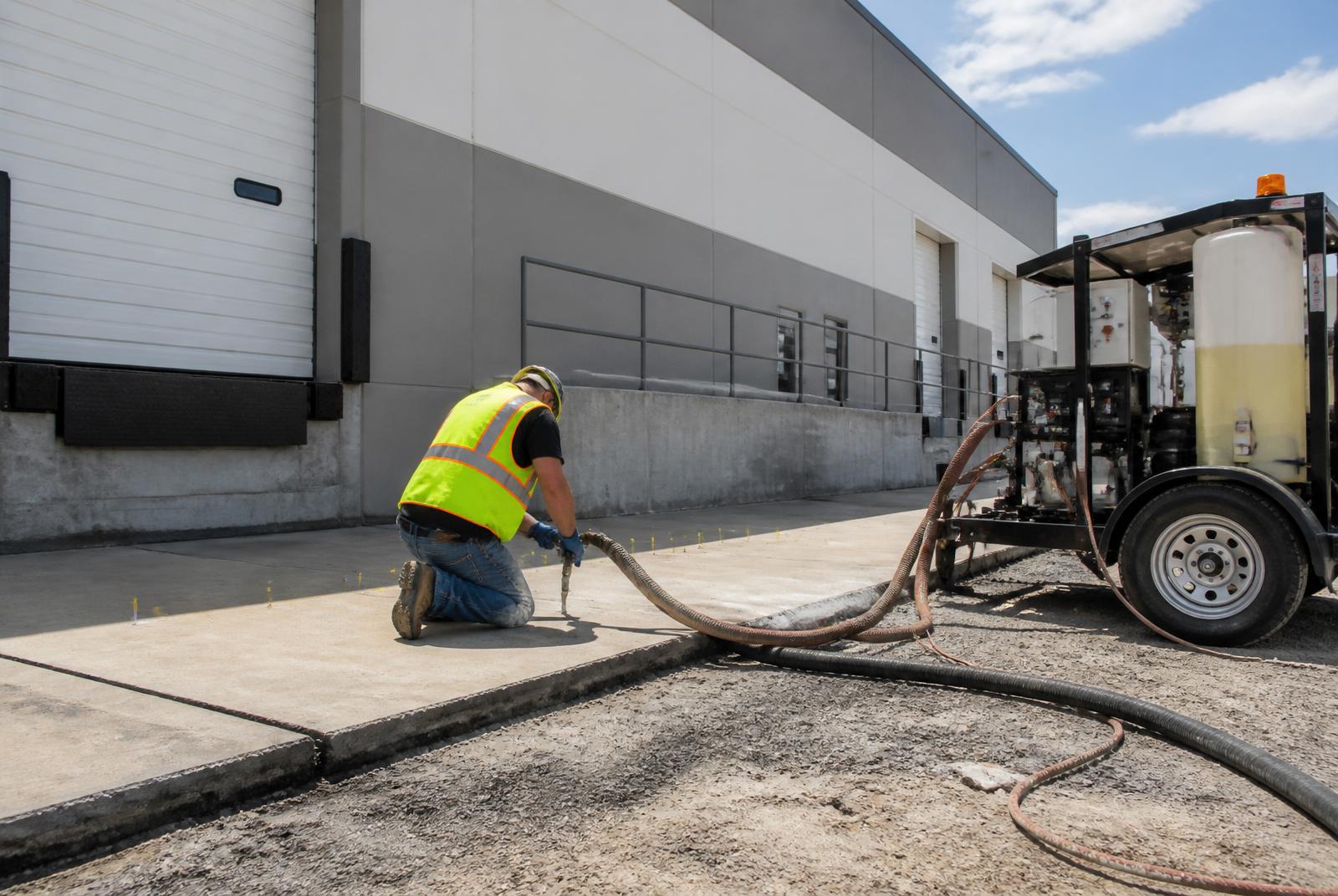
The good news: a lipped panel is one of the fastest and cheapest concrete repairs available. Foam leveling raises the low panel — or drops the high one adjacent to the ground level — in under an hour, and it's walkable immediately.
For the underlying service, see sidewalk leveling. Serving Spokane, WA and the surrounding Inland Northwest. Ready to skip ahead? Request a free estimate.
Signs to watch for
How this problem shows up.
A visible lip between two panels
You can catch a toe, a shoe, or a stroller wheel on it.
A rocking panel
One corner tips when weight lands on it — evidence of a void underneath.
Cracks running along the panel edge
The unsupported section is fracturing.
Panels tilting sideways
One edge sits lower than the other, making the walking surface off-plane.
Dirt or mulch spilling into the joint
Soil migration confirms an active void.
Water pooling on a specific panel
Panel has dropped enough to hold water — usually the same panel with the lip.
Common causes
Why it happens in the Inland Northwest.
Spokane's freeze/thaw cycles, clay-and-silt soils, and heavy seasonal runoff produce a fairly predictable set of root causes.
Tree roots — growing or decaying
Live roots lift panels; dead ones rot and drop them.
Poor drainage
Runoff along the sidewalk edge erodes soil under the panel.
Freeze/thaw heave
Wet subgrade freezes unevenly and pops one panel corner above its neighbor.
Loose backfill from utility work
Trench under or beside the walk keeps settling long after the utility crew has left.
Erosion from sprinklers or over-watered beds
Chronic saturation right at the edge pulls soil out from under the slab.
How to determine severity
Read your slab like a pro.
A quick self-triage. When in doubt, request a free on-site walkthrough.
- Under ¼ inch: cosmetic, but on the ADA watch list. Fix now while it's cheap.
- ¼–½ inch: ADA-recognized trip hazard threshold. Fix before someone catches a toe.
- ½ inch and up: municipal code violation in most Spokane-area jurisdictions.
- Rocking panel or hollow sound: void is real, panel movement is progressing.
- Panel broken through with pieces at different heights: replacement territory for that panel only.
Not sure how bad it is?
Get a free walkthrough before it gets worse.
We'll measure the drop, check for voids, evaluate the drainage, and give you an honest recommendation — including whether it's a leveling job or something else.
Why waiting makes it worse
Settlement doesn't fix itself.
Every cause listed above keeps working whether or not the slab is addressed.
- Liability from a fall on your sidewalk can outweigh multiple repair jobs.
- Citations force the fix on a timeline and price that isn't yours to choose.
- The lip grows each freeze/thaw cycle.
- Adjacent panels start following the same drainage failure and drop with it.
- Insurance may cover one fall claim, but rates rise and the hazard is documented for the future.
Repair options
What are your choices?
An honest comparison — the right fix depends on the slab, the cause, and the goal.
Polyurethane foam leveling
Lifts the low panel to match its neighbor — the fastest and cleanest fix.
Grinding the high panel
Fast and cheap, but leaves a ramp, doesn't fix the void, and often the panel keeps shifting.
Mudjacking
Works, but heavier, larger holes, longer cure than foam.
Panel replacement
Right when a panel is broken beyond lifting.
Why polyurethane foam usually wins
The best fit for the vast majority of Spokane slabs.
- Cures in about 15 minutes — you can drive or walk on the slab the same day.
- Closed-cell foam doesn't wash out or absorb water like sand or slurry-based methods.
- Injection holes are dime-sized, not the golf-ball ports left by mudjacking.
- Lightweight — adds roughly 4 lbs per cubic foot vs. 100+ lbs for mud slurry, so it won't re-settle weak soil.
- Stabilizes the underlying soil at the same time it lifts the slab.
For a full comparison, see polyurethane foam vs. mudjacking in the Learning Center.
When replacement may be necessary
The honest cases where leveling isn't the right call.
- The slab is crumbling, spalling apart, or shattered with structural cracks — there's no solid piece left to lift.
- The concrete is very thin (below ~3 inches) and would crack under the lift pressure.
- You're changing the layout — widening a driveway, moving a patio, adding a new pour.
- Reinforcement is severely rusted and the slab is delaminating.
More detail in concrete leveling vs. replacement.
Frequently asked questions
Straight answers from Spokane homeowners.
- Am I legally responsible for the sidewalk in front of my house in Spokane?
- In most Spokane-area jurisdictions, yes. Check your specific city code, but plan on it.
- What's the ADA threshold for a trip hazard?
- Vertical differences over ¼ inch require beveling; over ½ inch require repair. Municipal code often mirrors this.
- Can just the one panel be lifted?
- Yes — that's foam leveling's biggest advantage over replacement.
- How long until it's walkable?
- Within 15–30 minutes.
- Will the fix be visible?
- Dime-sized injection holes patched with matching material. Much cleaner than mudjacking or grinding.
- What if a tree root is the cause?
- We'll lift the panel, but if a live root is still pushing, the fix is temporary until the root is addressed.
- Does insurance cover fall claims on my sidewalk?
- Homeowner's policies often do, up to policy limits. But claims raise premiums and the hazard becomes a documented issue.
- Do you handle HOAs and municipal walks?
- Yes — see our HOA sidewalk repair and municipal sidewalk repair pages.
Related services
Explore the services that solve this problem.
Considering budget? Sidewalk leveling cost in Spokane.
Related problems
Other homeowner questions we hear.
From the Learning Center
Related reading before you request an estimate.
Free estimate — no obligation
Fix it before the next wet season.
Settlement compounds. Every rainstorm and freeze/thaw cycle makes the void bigger. Get an honest walkthrough now and know exactly what your options are.
Lift it — don't replace it.
Have questions about your concrete? Need advice? Want a free estimate? We're here to help. Concrete leveling saves the slab you already have, at a fraction of the cost of replacement.
- Often less costly and less disruptive than tear-out and replacement
- Repair before replacement when appropriate
- Modern concrete lifting methods
- Clear recommendations — no pressure, no upsells
Free Estimates · Spokane-Focused Service · Clear Recommendations