Concrete Leveling in Spokane, WA
Lift sunken driveways, sidewalks, patios, garage floors, and pool decks back to grade — without the cost or disruption of full replacement. Spokane Concrete Leveling uses polyurethane foam injection to restore structurally sound concrete across the region.
Free Estimate · Honest Recommendations · Locally Owned
Overview
Uneven concrete is common — replacement isn't always the answer.
Concrete settlement is one of the most common problems homeowners run into. Driveways, sidewalks, patios, garage floors, and pool decks all rely on the soil beneath them for support, and when that soil settles, erodes, or shifts, the concrete above it moves with it. The result is uneven slabs, trip hazards, water pooling in the wrong places, and cracks that seem to appear out of nowhere.
What surprises many Spokane homeowners is that a slab doesn't have to be replaced just because it has sunken. In many cases the concrete itself is still in good structural condition — it's the support beneath it that has failed. Once voids are filled and the soil is stabilized, the existing slab can often be lifted back into position, saving time, cost, and the disruption of demolition.
This page is a plain-language guide to concrete leveling in Spokane. It explains what leveling is, why concrete settles in the first place, the warning signs to look for, how the repair works, and how to decide between leveling and replacement. When you're ready, our team is available for a free on-site estimate — no pressure and no obligation.
What is concrete leveling?
Lifting existing slabs back into place, without replacement.
Concrete leveling is a repair method for slabs that have settled unevenly. Instead of tearing out and replacing the concrete, a specialist raises it back toward its original position by improving the support underneath.
How lifting works
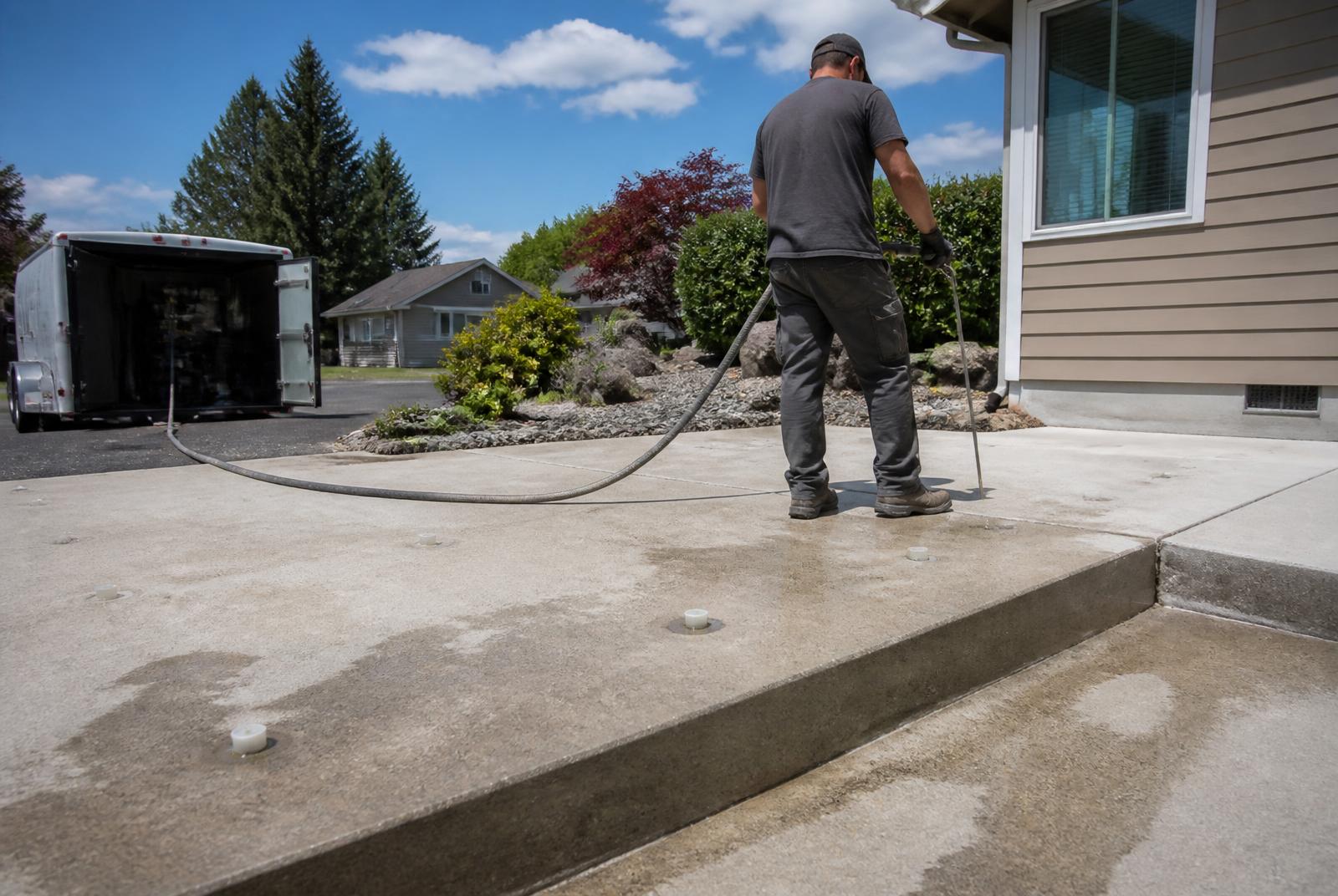
Small, dime-sized holes are drilled through the slab. A two-part polyurethane foam is injected through those holes and expands underneath the concrete, filling voids, densifying loose soil, and gently lifting the slab back toward level. The foam cures within minutes and provides ongoing support.
Why slabs settle
Slabs settle when the soil beneath them loses volume or strength. That can happen because of water erosion, poor drainage, freeze-thaw cycles, loose construction fill, tree roots, or expansive soils. The concrete itself may be perfectly sound — but with no support beneath it, it drops.
When leveling is considered
Leveling is typically considered when the concrete is structurally intact but out of position — settled joints, uneven driveways, sunken patios, sloping garage floors, or sidewalks with vertical offsets. If the slab is heavily crumbling or actively breaking apart, replacement may make more sense.
Why it appeals to homeowners
Most residential jobs are finished in a few hours with minimal disruption. There's no demolition, no waiting for new concrete to cure, and the original slab — with its existing color, texture, and layout — stays in place.
Common causes of concrete settlement
Settlement almost always starts beneath the slab.
A slab is only as stable as the soil supporting it. Here are the most common reasons that support breaks down in the Spokane area.
Soil settlement
The soils beneath most concrete slabs continue to compact and shift for years after construction. As those soils densify unevenly, the slab loses uniform support and begins to settle in the weakest spots.
Water erosion
Water is the single biggest driver of concrete settlement. When runoff or leaks move fine soils out from under a slab, the concrete is left spanning small voids and eventually drops into them.
Poor drainage
Downspouts that discharge next to slabs, grade that slopes toward the house, and low spots that repeatedly saturate the soil all accelerate settlement. Saturated soil compresses more easily under the weight of concrete.
Freeze-thaw cycles
Spokane winters bring repeated freeze-thaw activity. Water trapped in cracks, joints, and the base beneath a slab expands when it freezes and contracts when it thaws, gradually shifting the concrete and opening voids underneath.
Construction fill
Many Spokane-area homes were built on engineered or trench fill. If that fill was not compacted in thin, uniform lifts, it settles unevenly and takes the concrete above it along with it — often years after the home was finished.
Tree roots
Large trees near driveways, sidewalks, and patios can pull moisture out of the soil and, in some cases, physically displace the base beneath a slab. The result is uneven support and localized settlement.
Expansive soils
Some soils in the Spokane region expand when wet and shrink when dry. Repeated cycles of swelling and shrinking work the base under a slab loose and contribute to long-term settlement.
Want to go deeper on local soil, drainage, and climate factors? Read why concrete sinks in Spokane in our Learning Center.
Request a free evaluationSigns you may need concrete leveling
How to tell if your concrete is a candidate.
You don't need to guess. These are the warning signs we see most often on Spokane properties during free inspections.
- ✓
Trip hazards
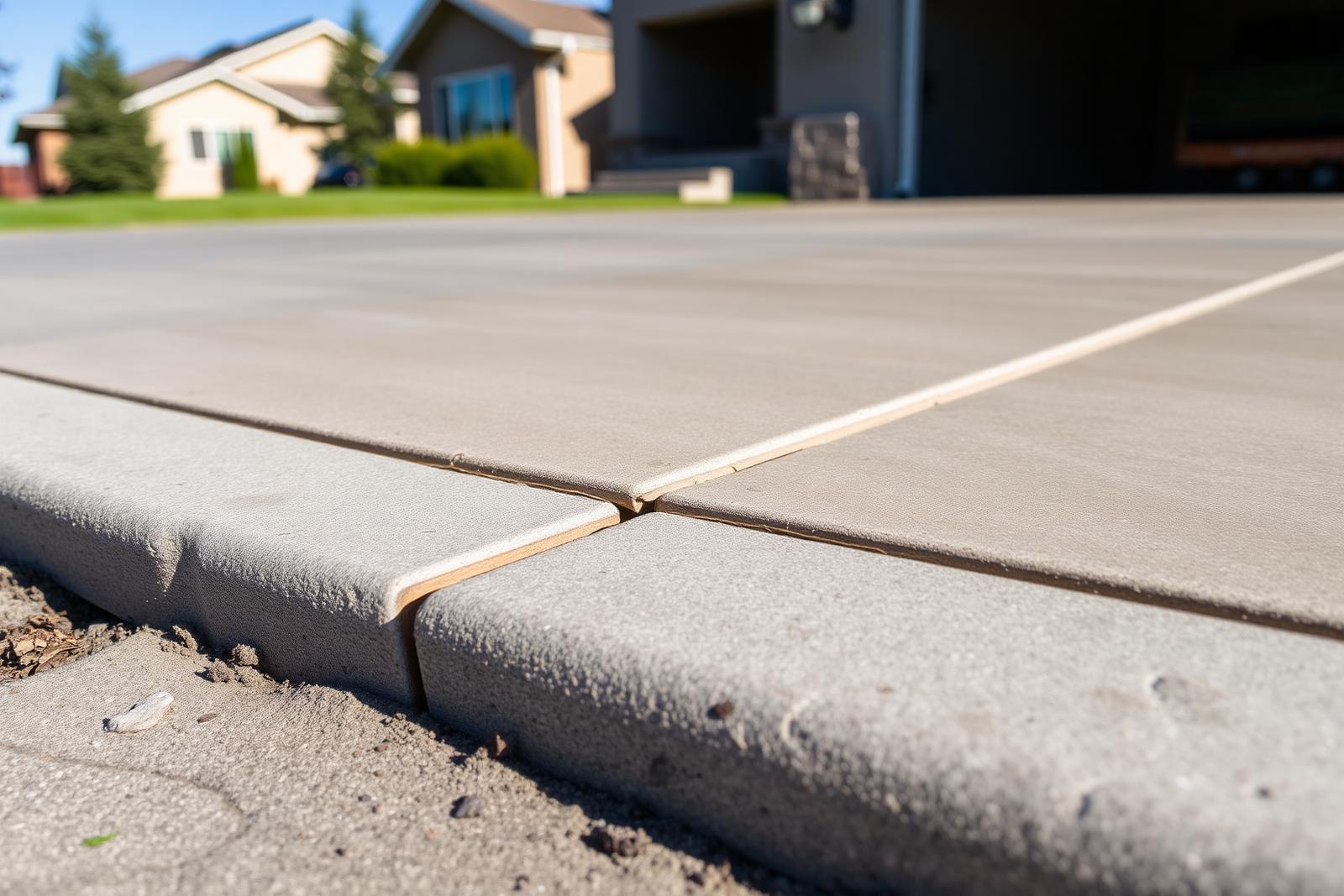
Vertical offsets where one slab has dropped below another create raised lips that catch feet, strollers, and equipment — a common concern on sidewalks, driveways, and patios.
- ✓
Pooling water
Puddles that linger long after rain or snowmelt indicate low spots where concrete has settled and is no longer draining as originally designed.
- ✓
Uneven slabs
Sections of concrete that no longer sit flush with each other, or that visibly tilt, are usually the result of soil movement beneath the slab.
- ✓
Settlement cracks
Diagonal cracks, cracks that widen at one end, or cracks that follow a sunken area often mean the concrete has lost support from below.
- ✓
Patios pulling away from the house
A gap opening between a patio and the exterior wall usually signals that the patio has settled away from the foundation as the soil beneath it moved.
- ✓
Garage floors settling
Sloping garage floors, gaps where the slab meets the foundation walls, or a slab that has dropped near the door are common signs of settlement inside the garage.
- ✓
Driveways dropping
Sections of driveway that have sunken near the garage apron, along the edges, or across wheel paths often indicate voids or loose soil under the slab.
- ✓
Sidewalk offsets
Public and private walkways frequently show settlement at joints, creating uneven surfaces that are hard to shovel, tough on wheels, and a liability risk.
Not Sure What You're Looking At?
Send us a photo or schedule a free on-site inspection — we'll give you a straight answer.
How polyurethane concrete leveling works
A step-by-step look at what happens on site.
The process is designed to be minimally invasive and easy to understand. Here's what to expect from arrival to walkthrough.
- 01
Inspection
A specialist walks the property with you, measures settlement, checks for voids, evaluates drainage, and looks at the surrounding grade and downspouts.
- 02
Evaluation
Based on what we see, we determine whether the concrete is a good candidate for leveling and outline what a repair would involve — in plain language, with no pressure.
- 03
Small drilled holes
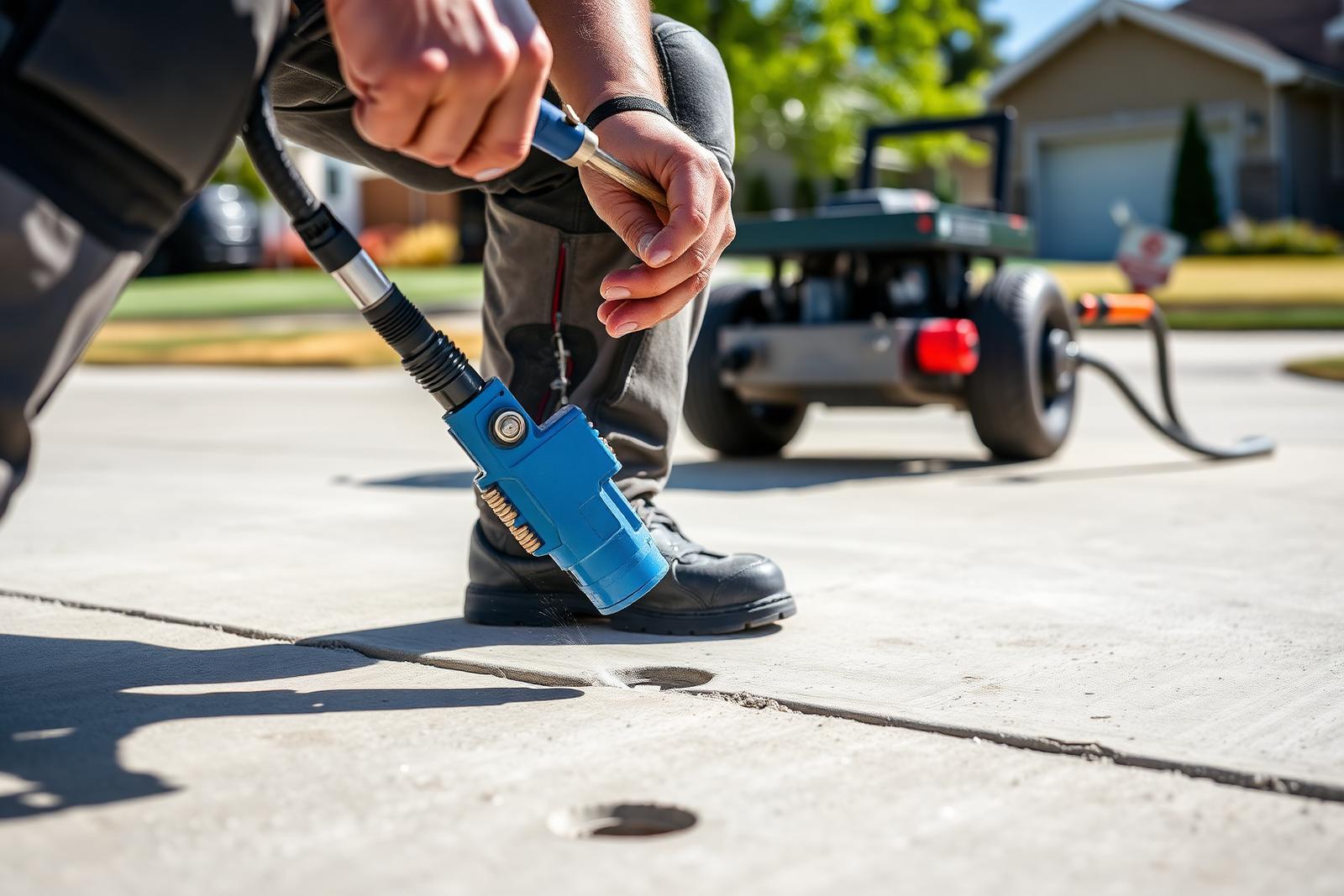
Dime-sized injection ports are drilled in planned locations so the lift can be controlled and the repair blends into the existing surface.
- 04
Foam injection
A two-part polyurethane material is injected through the ports. It expands beneath the slab to fill voids, densify loose soils, and provide new support.
- 05
Controlled lifting
As the foam expands, the technician monitors the slab with levels and reference marks, adjusting placement to bring the concrete back toward its original grade.
- 06
Void filling
Any remaining voids beneath the slab are filled so the concrete is fully supported, not just resting on isolated points.
- 07
Hole patching
Once the lift is complete, the injection ports are cleaned and patched with a color-matched grout so they blend into the surrounding concrete.
- 08
Return to service
Polyurethane foam cures quickly. Most surfaces can be returned to normal foot or vehicle traffic soon after the work is finished — your specialist confirms timing for your project.
Curious how foam compares to older methods? See polyurethane foam vs. mudjacking in our Learning Center for a side-by-side breakdown.
Services we provide
Concrete leveling for every surface on your property.
Each service has its own dedicated page with more detail on process, pricing considerations, and what to expect. Explore whichever fits your project.
Driveway Leveling
Sunken driveway panels, dropped garage aprons, and uneven wheel paths lifted back to grade — without the cost of a full replacement.
Explore driveway levelingSidewalk Leveling
Uneven sidewalks and raised joints are one of the most common trip hazards on residential property. Leveling restores a safer, more uniform walking surface.
Explore sidewalk levelingPatio Leveling
Patios that have settled toward the house, tilted, or developed low spots can often be lifted back to level so you can enjoy your outdoor living space again.
Explore patio levelingGarage Floor Leveling
Sloping garage floors and slabs that have dropped near the door are common in older Spokane homes. Foam injection can restore floor height without demolition.
Explore garage floor levelingPool Deck Leveling
Uneven pool decks create trip hazards on wet, barefoot surfaces. Leveling helps restore proper slope and remove offsets around the pool.
Explore pool deck levelingCommercial Concrete Leveling
Warehouses, storefronts, parking areas, and loading zones with settled slabs benefit from fast, low-disruption polyurethane concrete leveling.
Explore commercial concrete leveling
Concrete leveling vs. replacement
A fair comparison — leveling isn't always the answer.
Both approaches have a place. Here's how to think about which one fits your specific project.
When leveling may be appropriate
- The concrete is structurally sound and mostly intact
- Cracks are stable and not actively shifting under load
- Settlement is caused by voids or loose soil, not failing concrete
- The homeowner wants to preserve existing color, texture, and layout
- The goal is to correct drainage, remove trip hazards, or restore appearance
- Access, cost, or downtime make full replacement impractical
When replacement may be recommended
- The concrete is severely crumbling, spalling, or breaking apart
- Multiple deep, active cracks run across the slab
- The slab has been repaired several times without lasting results
- The base is compromised in ways that lifting cannot address long-term
- The homeowner wants to change the size, shape, or material entirely
- A structural engineer or building official recommends replacement
For a more detailed comparison including cost, longevity, and appearance, read our Learning Center guide on concrete leveling vs. concrete replacement.
Benefits of concrete leveling
What homeowners gain from lifting instead of replacing.
Restores safety
Bringing settled slabs back to grade removes trip hazards on walkways, driveways, and patios, and helps prevent falls in high-traffic areas.
Improves appearance
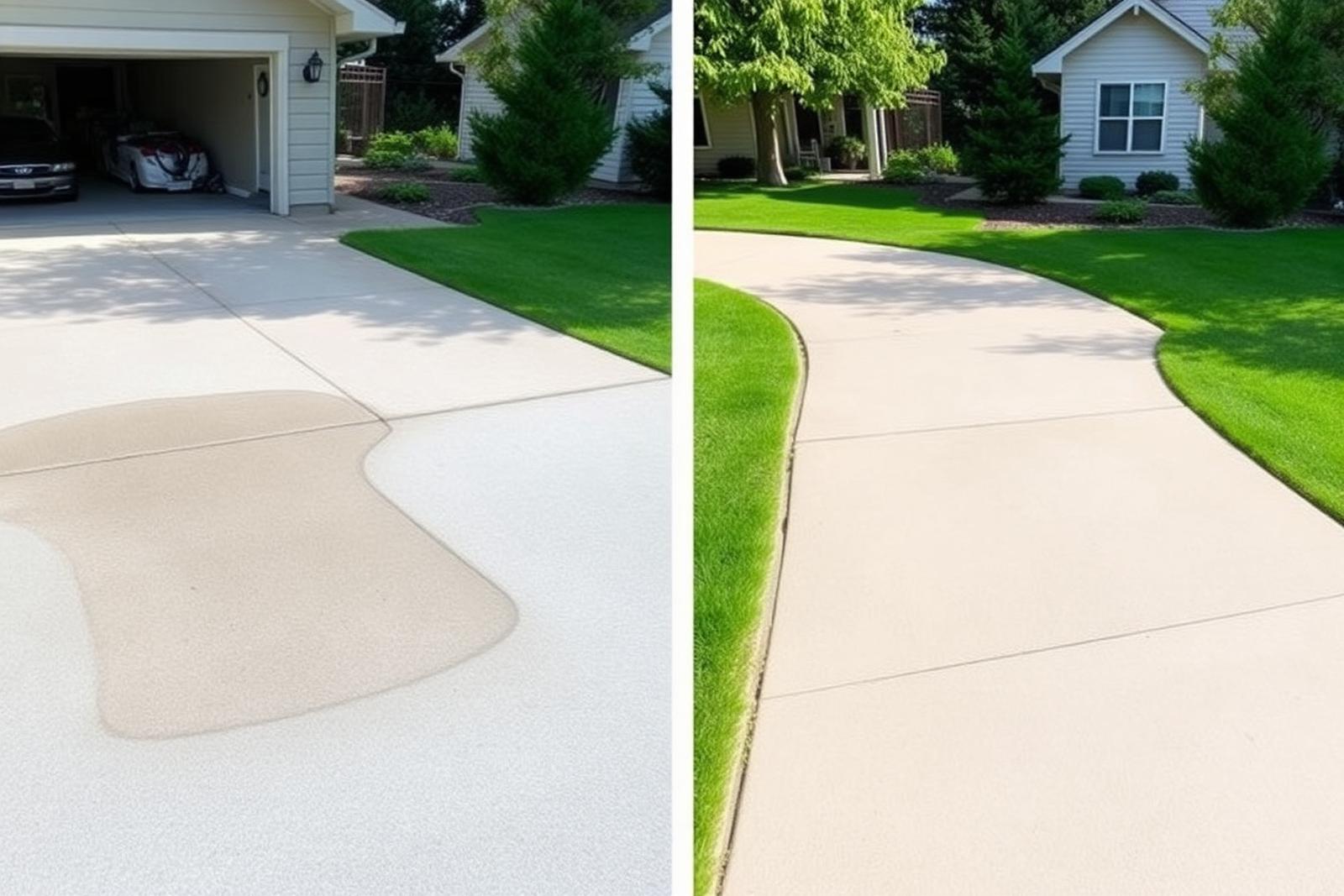
Leveling restores the original lines of your concrete without the color mismatch that comes from patching new pours next to older slabs.
Improves drainage
Correcting slope helps water shed off the concrete instead of pooling against your home, garage, or fence — protecting the repair and the structure.
Preserves existing concrete
Lifting the slab you already have keeps the original surface, layout, and finish intact — no waiting for new concrete to cure or trying to match aged work.
Less disruption
Most residential leveling projects are completed in a few hours with minimal noise, no demolition, and no extended closure of driveways or walkways.
Often more cost-effective
When leveling is a fit for your slab, it typically costs a fraction of full replacement — though every project is evaluated on its own merits.
Frequently asked questions
Homeowner questions about concrete leveling.
Straightforward answers to the questions we hear most often during Spokane estimates.
- What is concrete leveling?
- Concrete leveling is a repair process that lifts settled slabs of concrete back toward their original position without tearing them out and replacing them. Most modern leveling is done with polyurethane foam injected through small holes drilled in the slab. The foam expands beneath the concrete, fills voids, densifies loose soil, and raises the surface back to grade.
- How long does concrete leveling last?
- Polyurethane foam is a stable, water-resistant material designed specifically for concrete lifting. When the underlying cause of settlement — such as poor drainage or a downspout dumping next to the slab — is also addressed, many homeowners see long-lasting results. Any slab can shift again if new voids form, so we look for the root cause during every estimate.
- Is polyurethane better than mudjacking?
- For most residential repairs, polyurethane foam has several advantages: smaller injection holes, much lighter weight per cubic foot than a cement slurry, faster cure times, and better resistance to washout from water. Mudjacking is still used in some situations. For a detailed comparison, see our Learning Center article on polyurethane foam vs. mudjacking.
- Can cracked concrete be lifted?
- In many cases, yes. Concrete with stable, non-widening cracks is often a good candidate for leveling. What matters most is whether the slab is still structurally intact enough to be raised as a piece. During a free estimate, a specialist evaluates the cracks and the concrete around them to determine whether lifting is realistic.
- Does leveling fix cracks?
- No. Leveling raises the slab and restores support beneath it, but it does not fill or cosmetically repair surface cracks. Existing cracks remain visible after the lift. Homeowners sometimes choose to seal or fill cracks separately once the concrete has been leveled.
- How long before I can drive on it?
- Polyurethane foam cures quickly compared to older slurry-based methods. Most driveways and walkways can be returned to normal use soon after the work is finished. Your technician will confirm the exact timeline based on the slab, temperature, and site conditions.
- How much does concrete leveling cost?
- Cost depends on the size of the slab, the amount of lift needed, access to the work area, and how much foam it takes to stabilize the base. In most cases, leveling costs a fraction of what full replacement would cost. A written estimate provides real numbers rather than a national average — our Learning Center article on concrete leveling cost in Spokane goes deeper.
- Can sidewalks be leveled?
- Yes. Sidewalks are one of the most common leveling projects because they settle at joints and create trip hazards. Most sound, non-crumbling sidewalks are strong candidates. See our sidewalk leveling page for more detail.
- Can driveways be leveled?
- Yes. Most residential driveways that have settled near the garage apron, along the edges, or in wheel paths are good candidates for polyurethane leveling. Learn more on our driveway leveling page.
- Can patios be leveled?
- Yes. Patios that have settled toward the house, tilted, or developed low spots can often be lifted back to level. Details are on our patio leveling page.
- Can garage floors be leveled?
- Yes. Foam injection can be used to lift settled garage slabs and fill voids beneath them. See our garage floor leveling page for more information.
- Can pool decks be leveled?
- Yes. Pool decks are often good candidates because the concrete itself is usually sound and the settlement is caused by water and soil issues beneath it. Our pool deck leveling page explains what to expect.
- Can concrete sink again?
- It's possible. Foam leveling addresses the current voids and supports the slab, but if a new water source develops, if drainage isn't corrected, or if soil conditions change, additional settlement can occur. That's why we look for the cause of settlement during every estimate, not just the symptom.
- Will insurance cover leveling?
- Coverage varies by policy and by the cause of settlement. Some policies cover damage from specific events but not gradual soil movement. Homeowners should check with their insurance provider about their individual coverage before assuming leveling will be reimbursed.
- How long does an estimate take?
- Most on-site estimates take about 20–45 minutes, depending on how many slabs are involved. A specialist walks the property with you, evaluates the concrete, and provides a written estimate with recommendations. There's no obligation to move forward. See what to expect during a concrete leveling estimate in the Learning Center.
Why Spokane homeowners choose us
Straightforward service from a local team.
No exaggerated claims, no invented stats — just how we approach every concrete leveling estimate.
Free estimates
Every inspection is free. You'll receive a written estimate and a clear explanation of your options with no obligation to move forward.
Educational approach
We walk you through what we're seeing on your concrete, why it's happening, and what the proposed repair is designed to accomplish — in plain language, without jargon.
Clear communication
You'll know what the work involves, how long it should take, and what the outcome should look like before we ever start.
Modern repair methods
We focus on polyurethane foam injection, a lightweight and water-resistant material designed for concrete lifting rather than a repurposed slurry.
Local Spokane service
We live and work in the Spokane area. That means we understand local soils, drainage challenges, and how our winters affect concrete over time.
Learning Center
Homeowner guides on concrete leveling.
Every article in our Learning Center is written to help Spokane homeowners understand their concrete before making a decision.
- Why concrete sinks in Spokane
- Polyurethane foam vs. mudjacking
- Concrete leveling vs. replacement
- Concrete leveling cost in Spokane
- How long does concrete leveling last
- Can cracked concrete be leveled
- Signs your concrete needs leveling
- Water pooling on your driveway
- Is concrete leveling worth it
- What to expect during an estimate
Service area
Concrete leveling across Spokane and nearby communities.
We serve Spokane, Spokane Valley, Liberty Lake, Airway Heights, Cheney, Mead, and the surrounding areas with same-week scheduling in most neighborhoods.
- Spokane
- Spokane Valley
- Liberty Lake
- Airway Heights
- Cheney
- Mead
- Nine Mile Falls
- Deer Park
Contact us
Have questions? Need an estimate? We're here to help.
A short, no-pressure inspection is often the difference between an expensive replacement and a same-day repair. Call, email, or request an estimate online — we'll take it from there.
Pricing guide
Concrete leveling cost in Spokane
Local price ranges, the factors that move the number, and how leveling compares to replacement.
Explore more
Related Services
Concrete leveling and lifting solutions for every surface around your Spokane property.
Lift it — don't replace it.
Have questions about your concrete? Need advice? Want a free estimate? We're here to help. Concrete leveling saves the slab you already have, at a fraction of the cost of replacement.
- Often less costly and less disruptive than tear-out and replacement
- Repair before replacement when appropriate
- Modern concrete lifting methods
- Clear recommendations — no pressure, no upsells
Free Estimates · Spokane-Focused Service · Clear Recommendations