Sidewalk Leveling in Spokane, WA
Remove trip hazards and restore uneven walkways without demolition or replacement. Our specialists use polyurethane foam injection to lift structurally sound sidewalks back to grade across Spokane and nearby communities.
Free Estimate · Honest Recommendations · Locally Owned
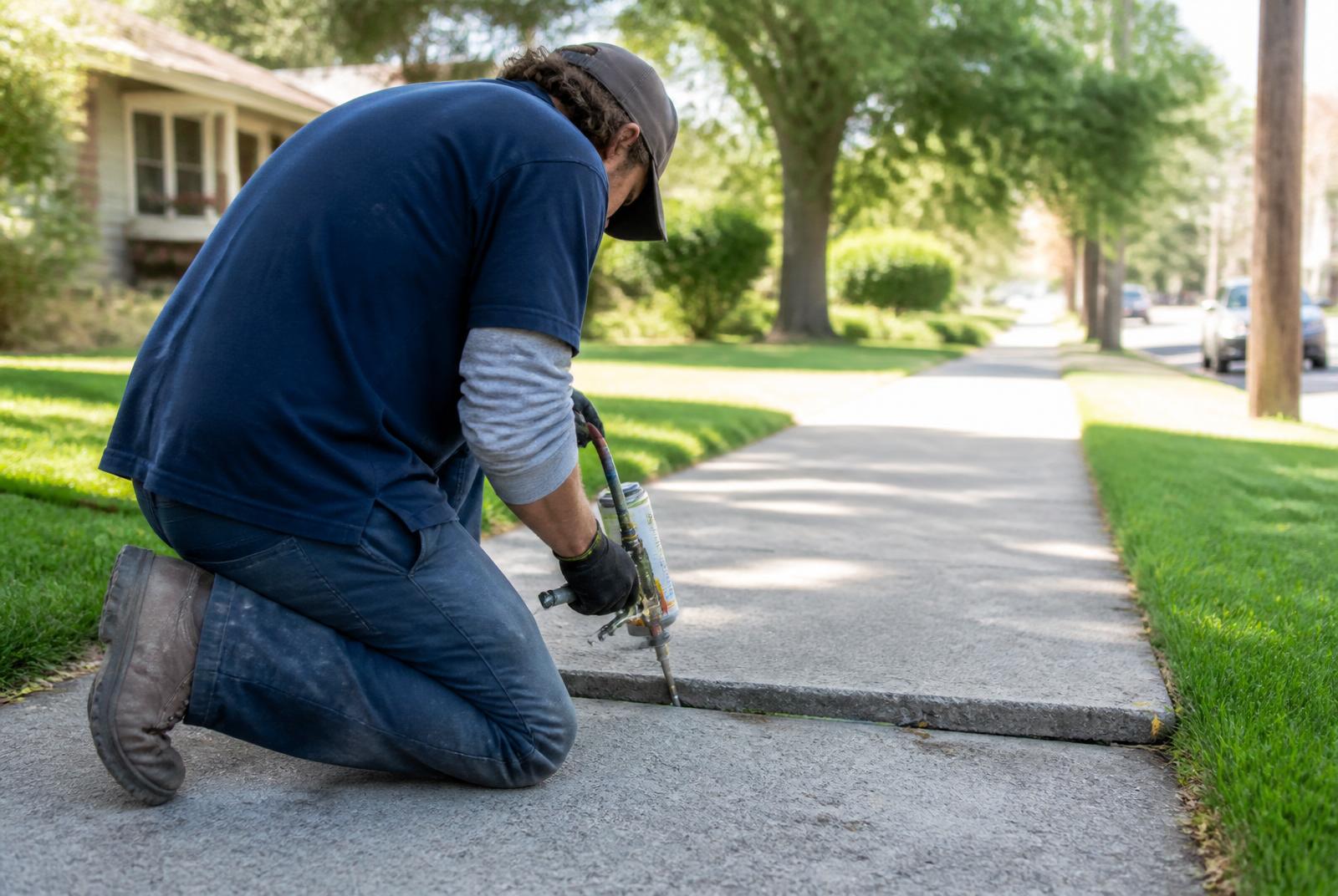
Overview
Uneven sidewalks are one of the most common concrete problems homeowners face.
A sidewalk is often the first piece of concrete anyone touches on your property. Guests, delivery drivers, kids, and neighbors use it every day, which makes even a small offset at a panel joint something you notice quickly. Raised edges catch toes, wheels, and canes; sunken sections collect water; and settlement cracks make the whole walk look older than it should.
Because uneven sidewalks are so visible, many homeowners assume the only option is to tear out the affected panels and pour new ones. Settlement, however, does not automatically require replacement. In most cases, the concrete itself is still structurally sound — what has changed is the soil beneath it. Once support below is restored, the panels can frequently be returned to a safe, level position.
That's the idea behind sidewalk leveling. Also called concrete lifting, this repair uses polyurethane foam injected through small, discreet ports to fill voids, stabilize the base, and raise sunken panels back toward their original grade. For many Spokane walkways it's a faster, cleaner, and less expensive alternative to replacement — provided the concrete is a good candidate. The sections below walk through why sidewalks sink, how the repair works, and how to tell whether leveling is right for yours.
Why sidewalks sink
Settlement almost always starts below the concrete.
A sidewalk is only as stable as the soil supporting it. Here are the reasons that support most often breaks down on Spokane properties.
Soil settlement
Sidewalks are typically poured on relatively thin bases of soil or gravel. As those soils compress over time, unsupported sections of the walk begin to tilt or drop, often at joints between panels.
Water erosion
Roof runoff, sprinkler overspray, and downspouts that discharge near the walkway slowly carry fine soils out from underneath the concrete. Small voids form and grow into visible settlement.
Poor drainage
When landscape grading or downspout placement sends water toward the sidewalk instead of away from it, saturated soils compress under foot and vehicle traffic and the slab follows.
Freeze-thaw cycles
Spokane's repeated winter freeze-thaw cycles push and lift the concrete as trapped water expands, then contracts. Over multiple seasons this action opens voids and shifts panels out of level.
Tree roots
Roots from mature trees can raise one side of a sidewalk panel while later shrinking and leaving voids under others. Both behaviors create the offsets homeowners notice at panel joints.
Construction fill
In newer neighborhoods, sidewalks are often poured over engineered fill. If that fill was not compacted in uniform lifts, it settles unevenly for years, taking the walk down with it.
For a deeper look at local soil and climate factors, read our Learning Center article on why concrete sinks in Spokane.
Request a free evaluationSigns your sidewalk may need leveling
How to tell if your walkway is a candidate.
These are the warning signs we see most often on Spokane sidewalks during free inspections.
- ✓
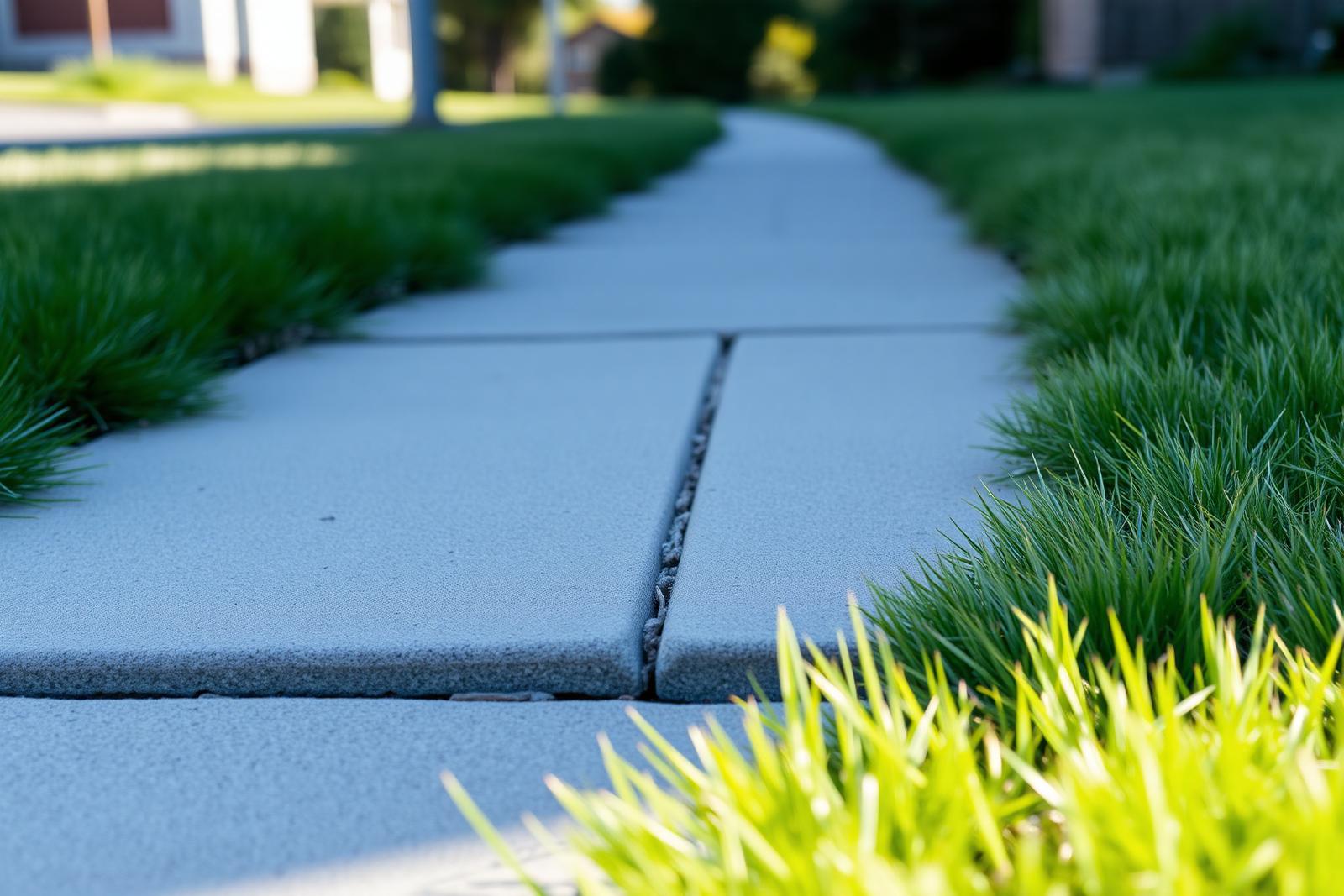
Raised edges at panel joints
One panel sitting higher than its neighbor is the classic sign of settlement — and the most common source of trip hazards.
- ✓
Uneven panels
A sidewalk should read as a continuous surface. When individual sections tilt front-to-back or side-to-side, the base soil is no longer supporting them evenly.
- ✓
Trip hazards
Any vertical offset large enough to catch a toe or wheel is worth addressing. Many municipalities consider even small lips a maintenance concern.
- ✓
Water pooling
Puddles that linger long after rain or snowmelt indicate the walk has settled into a low spot rather than draining as originally graded.
- ✓
Settlement cracks
Diagonal cracks, cracks that widen at one end, and cracks that follow the outline of a sunken area often signal the concrete has lost support from below.
- ✓
Sections separating
Panels pulling away from each other or from adjacent porches, driveways, and curbs point to soil movement beneath the walk.
Not Sure What You're Looking At?
Send us a photo or schedule a free on-site inspection — we'll give you a straight answer.
Trip hazards
Why uneven sidewalks are a safety concern.
Vertical offsets between panels are the leading cause of falls on residential walkways. Even a small lip can be enough to catch a toe, cane, stroller wheel, or scooter.
Addressing settlement early may also help slow additional movement by filling the voids water is using to travel beneath the slab — though no repair can guarantee a walk never shifts again.
Family safety
The people who use the walk most are the ones most likely to catch a raised edge in daily routines like carrying groceries or taking out the trash.
Visitors
Uneven walkways are unfamiliar terrain for guests, especially at night or in winter when snow can hide the offset entirely.
Children
Kids running to a friend's house or riding a scooter can be caught off guard by even modest lips at panel joints.
Older adults
Balance and reaction time change with age. Small changes in surface height that a younger person might correct for can lead to serious falls.
Delivery drivers and service workers
Package carriers, meter readers, and other visitors typically walk your sidewalk quickly and unfamiliarly — exactly the conditions in which trip hazards get missed.
How sidewalk leveling works
Polyurethane foam lifting, explained step by step.
The process is designed to be minimally invasive and easy to follow. Here's what happens from arrival to walkthrough.
- 01
Inspection
A specialist measures the offset at each joint, checks for voids, evaluates drainage, and determines whether the sidewalk is a good candidate for leveling.
- 02
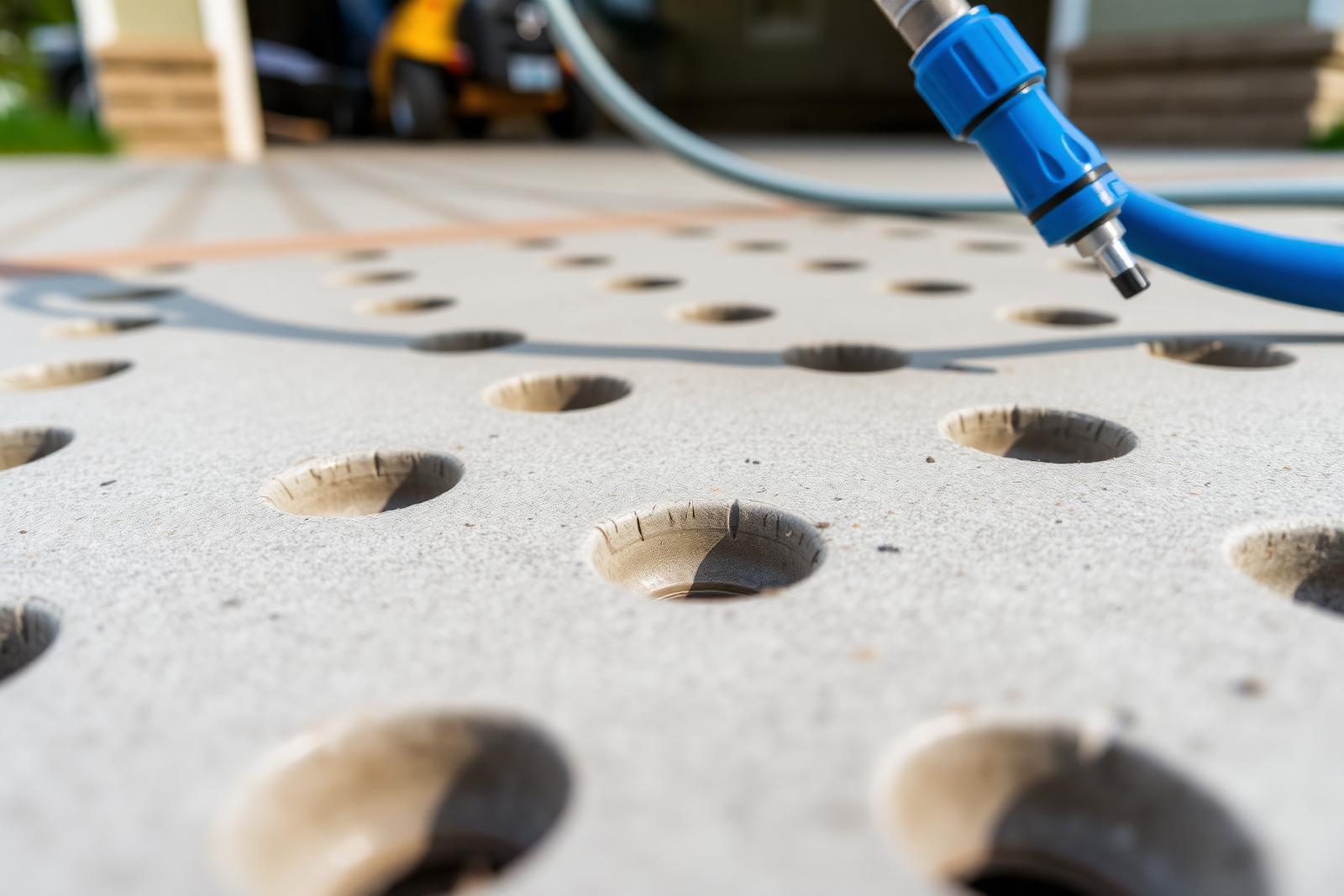
Small drilled holes
Discreet, dime-sized injection ports are placed at planned locations along the affected panels so the lift is controlled and predictable.
- 03
Foam injection
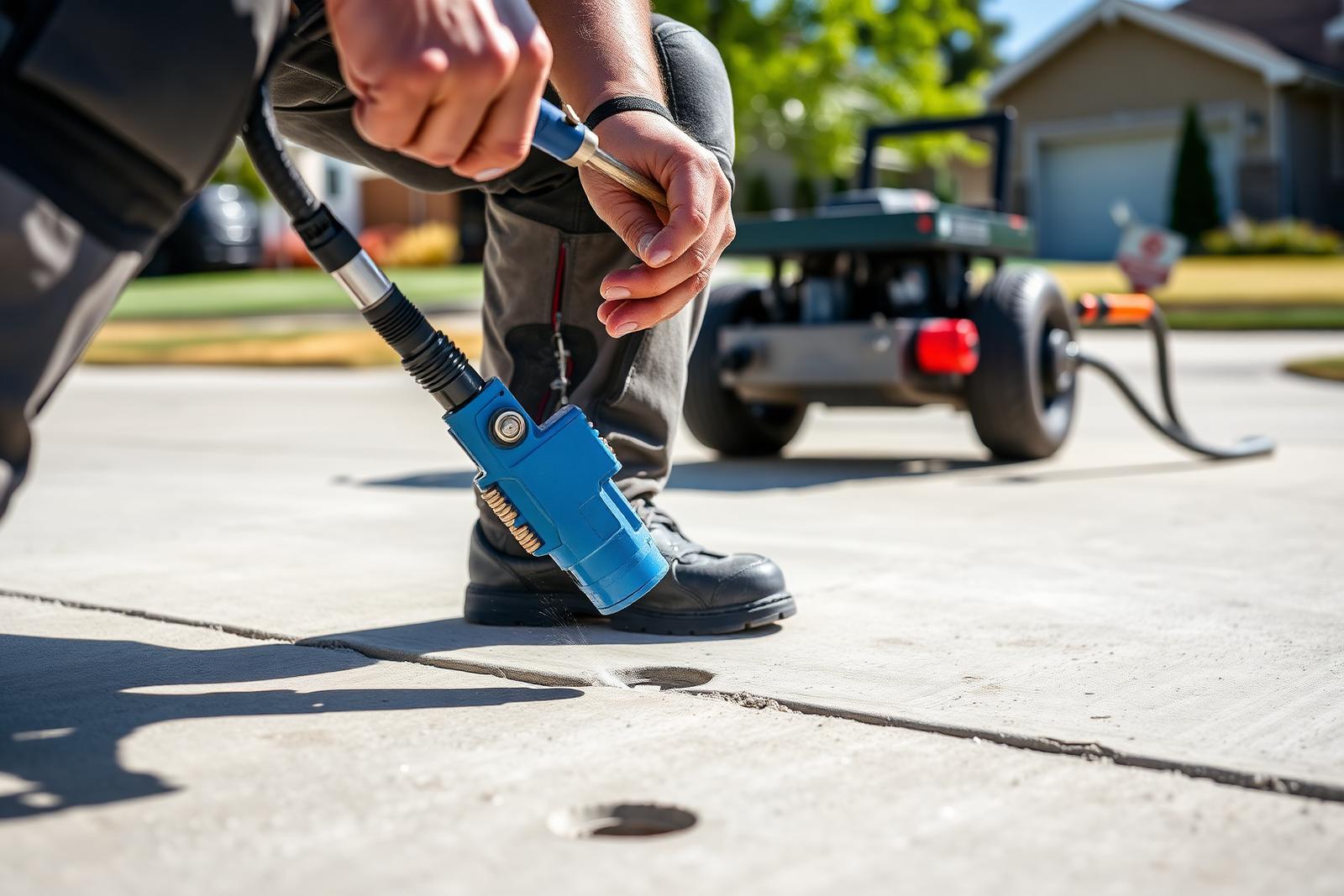
A two-part polyurethane material is injected through the ports. It expands to fill voids, densify loose soils, and provide new support beneath the slab.
- 04
Precision lifting
As the foam expands, the technician monitors the panel with levels and reference marks, adjusting placement to bring the sidewalk back toward its original grade.
- 05
Patching
Injection ports are cleaned and patched with a color-matched grout so the repair blends into the surrounding concrete.
- 06
Return to service
Polyurethane foam cures quickly. Most sidewalks can be walked on soon after the work is complete — your specialist will confirm timing for your specific project.
Curious how foam compares to older methods? See polyurethane foam vs. mudjacking in our Learning Center for a side-by-side breakdown.
Leveling vs. replacement
When each approach makes sense.
Both options have a place. A fair comparison helps you make the right call for your sidewalk.
When leveling may be appropriate
- The panels are structurally sound and mostly intact
- Offsets at joints are creating trip hazards or drainage problems
- Cracks are stable and not actively shifting under load
- The homeowner wants to preserve the existing walk and layout
- Settlement is caused by voids or loose soils, not failing concrete
When replacement may be recommended
- Panels are severely crumbling, spalling, or breaking apart
- Multiple deep, active cracks run through individual panels
- The sidewalk has been repaired several times without lasting results
- The base is compromised in ways lifting cannot address long-term
- The homeowner wants to change the width, path, or material
For a more detailed comparison including cost, longevity, and appearance, see our Learning Center article on concrete leveling vs. concrete replacement.
Benefits of sidewalk leveling
What homeowners gain from lifting instead of replacing.
Improved safety
Bringing offset panels back into alignment removes the raised edges that catch toes, canes, strollers, and scooter wheels.
Improved appearance
A level, well-aligned walk reads as cared for. Leveling restores the original line of your sidewalk without patchwork replacement panels.
Improved drainage
Restoring slope helps water move off the walkway instead of pooling against the foundation, garage, or landscaping.
Preserving existing concrete
Lifting the sidewalk you already have keeps its original color, texture, and finish intact — no mismatched replacement panels next to older work.
Less disruption
Most residential sidewalks are leveled in a few hours with minimal noise, no heavy demolition, and no extended loss of access to your front door.
Frequently asked questions
Homeowner questions about sidewalk leveling.
Straightforward answers to the questions we hear most often during Spokane sidewalk estimates.
- Can uneven sidewalks be leveled?
- Most structurally sound sidewalks with raised edges, sunken panels, or minor cracks can be considered for leveling. During a free inspection, a specialist evaluates the concrete's condition and the underlying soil to determine whether lifting is the right approach.
- How long does sidewalk leveling last?
- Polyurethane foam is a stable, water-resistant material designed for concrete lifting. When the underlying cause of settlement — such as a downspout discharging next to the walk — is also addressed, many homeowners see long-lasting results. Any concrete can shift again if new voids form, so we look for the root cause during the estimate.
- Will the existing cracks disappear after leveling?
- No. Leveling raises the panels and restores support beneath them, but it does not cosmetically repair surface cracks. Existing cracks remain visible after the lift. Some homeowners choose to seal cracks separately once the walk has been leveled.
- How long before people can walk on the sidewalk?
- Polyurethane foam cures quickly. In most cases, foot traffic can resume shortly after the work is finished, and your technician will confirm the exact timing based on temperature and site conditions.
- Does homeowners insurance cover sidewalk repairs?
- Most standard policies do not cover gradual settlement, which is considered normal wear over time. Coverage may apply in specific situations such as sudden damage from a covered event. Always confirm with your insurance provider before assuming a repair is covered.
- What causes sidewalks to sink in the first place?
- The most common causes in the Spokane area are soil compression, water erosion beneath the slab, poor drainage, freeze-thaw cycles, tree root activity, and poorly compacted construction fill. Often it is a combination of two or three of these factors.
- Is polyurethane foam better than mudjacking?
- Polyurethane foam uses smaller injection ports, weighs far less per cubic foot than a cement slurry, cures faster, and is not affected by water in the same way. For a deeper side-by-side comparison, see our Learning Center article on polyurethane foam vs. mudjacking.
- Can tree roots cause sidewalk settlement?
- Yes. Growing roots can lift some sections of a walk, and when those roots later shrink or die back, the disturbed soil often settles and creates voids. Root-related sidewalk movement is common near mature trees in Spokane neighborhoods.
- How much does sidewalk leveling cost?
- Cost depends on the number of panels, the amount of lift needed, and access to the work area. Leveling typically costs a fraction of what full replacement would cost. A written estimate provides real numbers rather than a national average — see our Learning Center article on concrete leveling cost in Spokane for more context.
- Do all sidewalks qualify for leveling?
- Not every sidewalk is a good candidate. Concrete that is severely crumbling, has multiple deep active cracks, or sits on a compromised base may be better served by replacement. An honest inspection will make the right approach clear.
More homeowner guides: concrete leveling cost in Spokane, how long concrete leveling lasts, whether cracked concrete can be leveled, and signs your concrete needs leveling.
Why Spokane homeowners choose us
Straightforward service from a local team.
No exaggerated claims, no invented stats — just how we approach every sidewalk estimate.
Free, no-pressure estimates
Every sidewalk inspection is free. You'll receive a written estimate and a clear explanation of your options with no obligation to move forward.
Honest recommendations
If your walk is a better candidate for replacement, or if only part of it needs lifting, we'll tell you. We'd rather earn a smaller job today than oversell one that won't hold up.
Modern repair methods
We focus on polyurethane foam injection — a lightweight, water-resistant material designed specifically for concrete lifting rather than a repurposed slurry.
Educational approach
We walk you through what we're seeing on your sidewalk, why it's happening, and what the proposed repair is designed to do — in plain language, not sales talk.
Local service
We live and work in the Spokane area. That means we understand local soils, drainage patterns, and how our freeze-thaw winters affect concrete over time.
Related concrete services
More ways we help Spokane homeowners and businesses.
Service area
Sidewalk leveling across Spokane and nearby communities.
We serve Spokane, Spokane Valley, Liberty Lake, Airway Heights, Cheney, Mead, and the surrounding areas with same-week scheduling in most neighborhoods.
- Spokane
- Spokane Valley
- Liberty Lake
- Airway Heights
- Cheney
- Mead
- Nine Mile Falls
- Deer Park
Contact us
Have questions about your sidewalk? Need an estimate? We're here to help.
A short, no-pressure inspection is often the difference between an expensive replacement and a same-day repair. Call, email, or request an estimate online — we'll take it from there.
Pricing guide
Sidewalk leveling cost in Spokane
Local price ranges, the factors that move the number, and how leveling compares to replacement.
Explore more
Related Services
Concrete leveling and lifting solutions for every surface around your Spokane property.
Lift it — don't replace it.
Have questions about your concrete? Need advice? Want a free estimate? We're here to help. Concrete leveling saves the slab you already have, at a fraction of the cost of replacement.
- Often less costly and less disruptive than tear-out and replacement
- Repair before replacement when appropriate
- Modern concrete lifting methods
- Clear recommendations — no pressure, no upsells
Free Estimates · Spokane-Focused Service · Clear Recommendations