Pool Deck Leveling — Coeur d'Alene, ID
A representative Coeur d'Alene pool deck project: settled deck panels adjacent to the pool coping — lifted flush without disturbing tile, coping, or the pool shell.
Representative Project · Serving the Inland Northwest
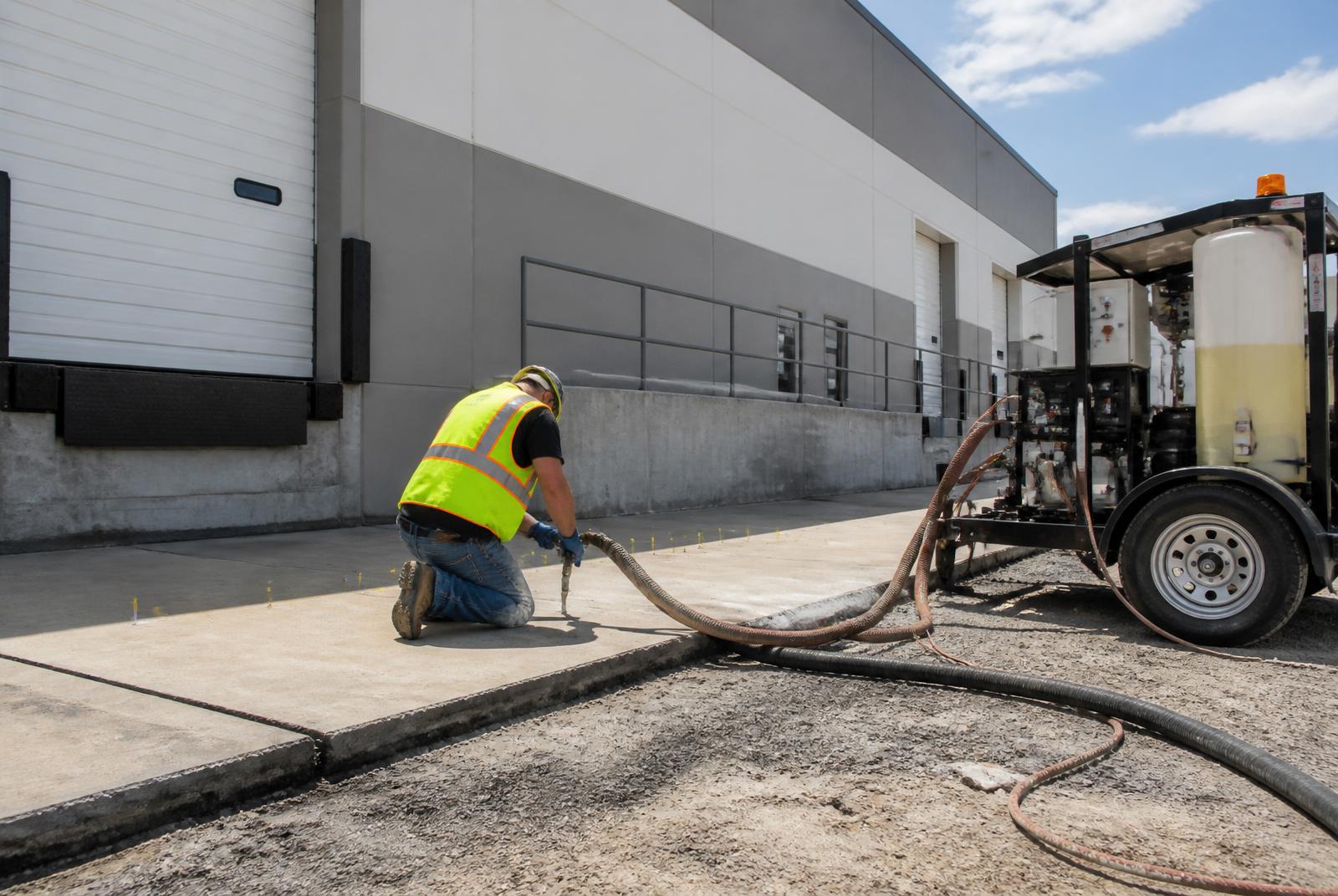
Illustrative project template. This case study documents the type of project we perform and the process we follow in this market. It is not a specific past customer's job — no customer names, testimonials, or outcomes are represented. Placeholder sections marked below will be replaced with real project photos and details as completed jobs are documented.
Local context
Coeur d'Alene, ID
Representative project location: near Fernan Lake and Sanders Beach.
- Nearby landmarksLake Coeur d'Alene, Tubbs Hill, McEuen Park
- Typical soilLakefront and near-lake parcels commonly have imported fill over native silt, with variable compaction around pool shells.
- DrainageSplash-out water and rainfall routinely wick under pool deck slabs adjacent to the coping.
- Freeze/thawFreeze/thaw cycles at pool coping joints are especially aggressive — water freezes right at the pool edge.
Project overview
What this project represents.
This case study represents a typical Coeur d'Alene lakefront-adjacent pool deck project. Three deck panels along one side of the pool had settled roughly 1 inch relative to the coping, creating a visible dip and a slight lip against the pool tile.
Polyurethane foam allowed the deck to be lifted back flush with the coping in one visit without any tile, coping, or pool-shell disturbance. The pool remained full and in use throughout the project.
The problem
What the homeowner was seeing.
- Three deck panels on the west side of the pool had settled approximately 1 inch relative to the coping stones.
- Water was pooling on the low deck panels after rain and swimmer splash-out, wicking under the coping.
- The homeowner had been quoted a full deck tear-out that would have required draining the pool.
Inspection findings
What the on-site walkthrough showed.
- Full-deck laser elevation shot with the coping as the reference.
- Void probing under the settled panels confirmed 1–2 inches of void under two of the three panels.
- Coping joint inspected — sealant was aging but still intact.
Cause of settlement
Why this slab moved.
- Splash-out water repeatedly saturated the sub-base outside the pool shell.
- The imported fill zone next to the pool consolidated over time, dropping the deck relative to the coping (which sits on the pool bond beam).
- Freeze/thaw cycles at the coping joint worsened the differential winter over winter.
See a similar issue at your property?
Get a free on-site estimate.
We'll measure the drop, check for voids, evaluate the drainage, and give an honest recommendation — including whether leveling is the right call.
Repair solution
How the slab was lifted.
- 1Injection ports staged around the settled panels — never directly at the coping joint.
- 2Lightweight polyurethane foam was chosen specifically because it adds negligible mass — critical when lifting adjacent to a pool shell.
- 3Lift was staged in short pulses with continuous laser monitoring. The pool water level and coping alignment were verified between pulses.
- 4Deck brought flush with the coping across all three panels. Coping joint resealed with a pool-grade urethane sealant.
Why polyurethane foam was selected
The right tool for this project.
- Polyurethane is roughly 1/40th the weight of mudjacking slurry — essential when working next to a pool shell.
- The pool did not need to be drained.
- Foam is hydrophobic — future splash-out won't wash it out.
- Fast cure meant the pool was back in normal use the same evening.
Repair timeline
Start to finish.
Estimate
30–45 minute on-site with coping and deck elevation shots.
Scheduling
Booked in-season within 2–3 weeks.
Repair day
About 4 hours on-site including sealant work.
Return to service
Deck usable same day; coping sealant fully cured within 24 hours.
Estimated project size
Approximately 180 sq ft — three deck panels along one pool side.
Expected lifespan
Polyurethane fill is inert and non-decomposing. With coping sealant refreshed and drainage away from the deck edge maintained, this repair is expected to hold long-term.
Maintenance recommendations
How to make the repair last.
- Refresh the coping joint sealant every 2 years — the single most important pool deck maintenance item.
- Direct any adjacent downspouts or irrigation away from the deck.
- Re-check elevations after the first winter to catch any minor settlement early.
Project photos
Placeholders for real project imagery.
Each slot below will be replaced with a real photo from an actual completed job. Placeholder cards are clearly labeled so nothing on this page implies a fabricated outcome.
Placeholder — Before Photo
Settled slab before repair — replace with the real before photo from the completed job.
Placeholder — After Photo
Slab lifted flush after polyurethane injection — replace with the real after photo.
Placeholder — Close-up Detail
Close-up of the joint or trip edge — replace with the real close-up.
Placeholder — Injection Process
Injection port and lift in progress — replace with the real process photo.
Placeholder — Finished Result
Finished slab, cleaned and re-opened for use — replace with the real finished photo.
Frequently asked questions
Questions we hear on projects like this.
- Did the pool need to be drained?
- No. Polyurethane foam is light enough and controllable enough to lift pool decks without draining the pool.
- Was the coping or tile disturbed?
- No — ports are placed away from the coping and the lift is monitored continuously.
- Can the pool be used during the repair?
- The deck itself is off-limits during the injection window (a few hours), but the pool water is unaffected.
- What about the coping stones — did they need to be relaid?
- No. The coping sits on the pool bond beam, not the deck slab, so it stayed put while the deck came back up to meet it.
- Will this hold through Coeur d'Alene winters?
- Yes — polyurethane doesn't lose strength at freezing temperatures. The most important winterization step is keeping the coping joint sealant in good shape.
Related resources
Learn more before you request an estimate.
- Service · Pool Deck Leveling
- Cost Guide · Pool Deck Leveling Cost in Spokane
- Problem · Why is my pool deck sinking?
- Comparison · Polyurethane Foam vs. Cement Slurry
- Service Area · Coeur d'Alene Service Area
- Learning Center · Polyurethane Foam vs. Mudjacking
- Learning Center · How Long Does Concrete Leveling Last?
- Project Library · All Projects
- Contact · Request a Free Estimate
Free estimate — no obligation
Have a slab that looks like this?
We'll walk your property, measure the drop, and give you a written scope you can compare against any replacement bid.