HOA Sidewalk Repair — Liberty Lake, WA
A representative Liberty Lake HOA project: common-area trip hazards across a residential association leveled to a documented, insurance-friendly standard.
Representative Project · Serving the Inland Northwest
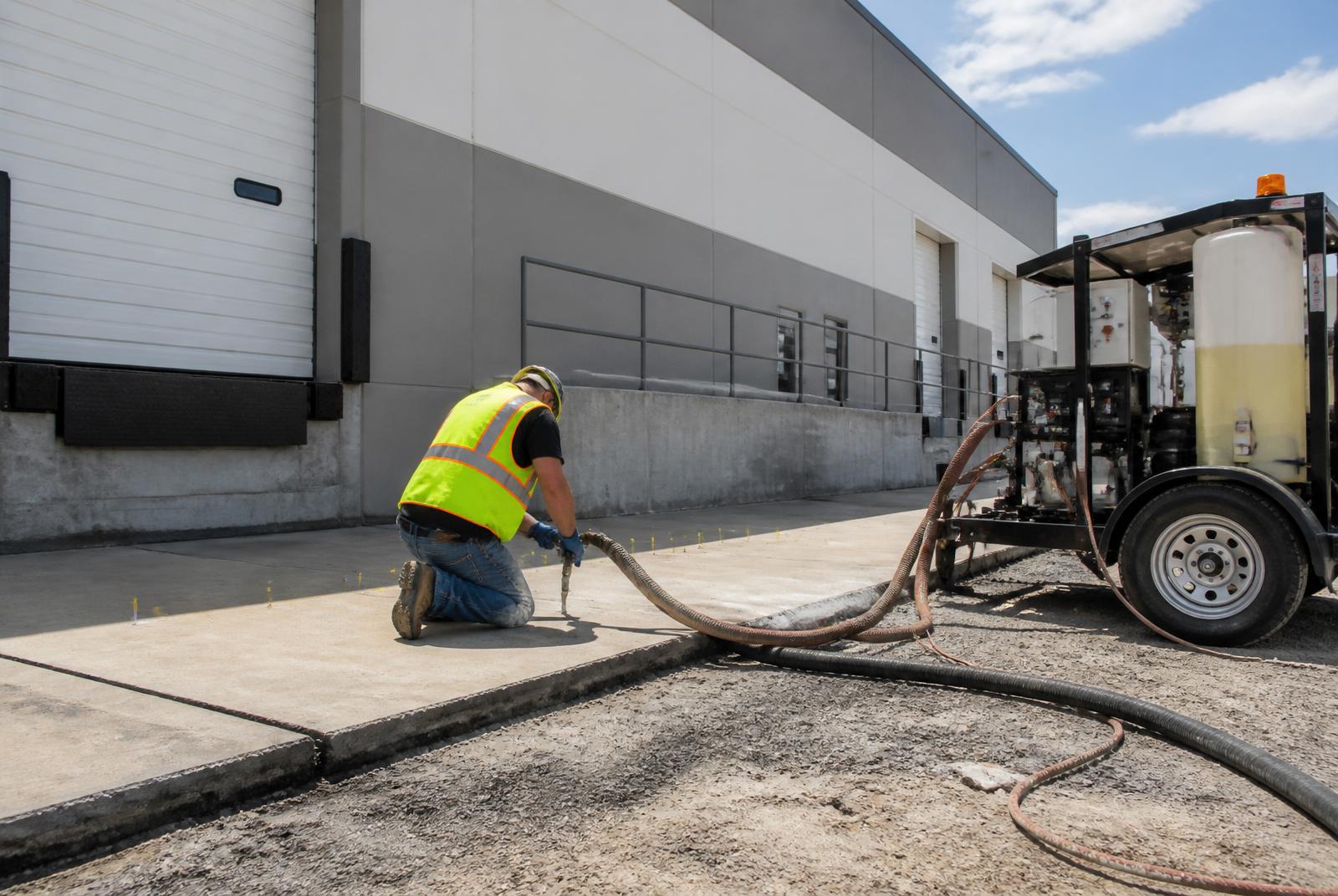
Illustrative project template. This case study documents the type of project we perform and the process we follow in this market. It is not a specific past customer's job — no customer names, testimonials, or outcomes are represented. Placeholder sections marked below will be replaced with real project photos and details as completed jobs are documented.
Local context
Liberty Lake, WA
Representative project location: River District HOA near Pavillion Park.
- Nearby landmarksPavillion Park, Liberty Lake Regional Park, Trailhead Golf Course
- Typical soilRiver District subdivisions frequently have engineered fill over silt — walkway settlement typically clusters near downspouts.
- DrainageHOA-owned walkways commonly run adjacent to building downspouts and irrigation lines.
- Freeze/thawLiberty Lake's colder shoulder seasons produce longer freeze windows that heave joint edges gradually.
Project overview
What this project represents.
This case study represents a Liberty Lake HOA scope: nine trip hazards on association-owned walkways, identified during a board-directed insurance review, documented and repaired under a fixed scope with photo evidence.
The polyurethane foam approach delivered a board-friendly outcome: minimal resident disruption, per-hazard pricing, before/after documentation, and same-day return to service on every walkway.
The problem
What the homeowner was seeing.
- Nine trip edges on HOA-owned walkways ranging from 1/2 to 1-1/8 inches.
- Association insurance carrier had flagged the hazards during a routine inspection.
- The board was weighing replacement (higher cost, longer disruption) against leveling for the annual maintenance budget.
Inspection findings
What the on-site walkthrough showed.
- Board-approved walkthrough with the property manager — every hazard photographed, GPS-tagged, and measured.
- Written scope with per-hazard pricing prepared for board approval.
- Downspout, irrigation, and root proximity captured for each panel.
Cause of settlement
Why this slab moved.
- Six hazards traced to downspout washout — repeated saturation of the walkway subgrade over 12+ years.
- Two hazards traced to root uplift from association-planted parking lot island trees.
- One hazard traced to differential settlement at a low spot in the walkway grading.
See a similar issue at your property?
Get a free on-site estimate.
We'll measure the drop, check for voids, evaluate the drainage, and give an honest recommendation — including whether leveling is the right call.
Repair solution
How the slab was lifted.
- 1Repairs scheduled across two working days, sequenced by walkway to minimize any single-area disruption.
- 2Each panel lifted with polyurethane foam under continuous laser monitoring.
- 3Every finished trip edge under 1/4 inch — within ADA guidance and consistent with the association's insurance carrier expectations.
- 4Board received a written project summary with before/after photos, elevation measurements, and maintenance recommendations for association records.
Why polyurethane foam was selected
The right tool for this project.
- Board-friendly documentation — before/after photos and elevation data.
- Per-hazard pricing gives the board a predictable annual maintenance budget line.
- Same-day return to service on every walkway means residents aren't inconvenienced.
- The cost of leveling all nine hazards was well below the cost of even a partial walkway replacement.
Repair timeline
Start to finish.
Scoping walkthrough
Half-day with the property manager.
Board approval
Written scope submitted for board vote — typical 2–4 week approval cycle.
Repair window
Two working days across the site.
Documentation
Final report with before/after photos delivered within one week of completion.
Estimated project size
Nine trip hazards across five walkways — approximately 180 sq ft of remedied concrete.
Expected lifespan
Polyurethane fill is stable long-term. With drainage corrections in place, additional trip-edge development from these locations is unlikely within the association's normal maintenance horizon.
Maintenance recommendations
How to make the repair last.
- Add walkway trip-edge inspection to the annual HOA maintenance walk.
- Extend building downspouts a minimum of 4 feet beyond walkway edges where feasible.
- Reseal walkway joints every 3 years as part of the standard maintenance contract.
Project photos
Placeholders for real project imagery.
Each slot below will be replaced with a real photo from an actual completed job. Placeholder cards are clearly labeled so nothing on this page implies a fabricated outcome.
Placeholder — Before Photo
Settled slab before repair — replace with the real before photo from the completed job.
Placeholder — After Photo
Slab lifted flush after polyurethane injection — replace with the real after photo.
Placeholder — Close-up Detail
Close-up of the joint or trip edge — replace with the real close-up.
Placeholder — Injection Process
Injection port and lift in progress — replace with the real process photo.
Placeholder — Finished Result
Finished slab, cleaned and re-opened for use — replace with the real finished photo.
Frequently asked questions
Questions we hear on projects like this.
- Do HOA boards usually approve leveling over replacement?
- In our experience, once the cost differential and documentation quality is understood, most boards prefer leveling for common-area walkways where the concrete itself is still sound.
- What documentation do you provide?
- Before/after photos, per-hazard elevation measurements, and a written project summary suitable for association records and insurance carrier communication.
- How do you handle resident notice?
- The property manager typically distributes resident notice 48 hours in advance. Walkways are only closed during their individual injection window.
- Can this be part of an annual maintenance contract?
- Yes — many HOA clients use us on a rolling maintenance basis rather than a single project. See our HOA sidewalk repair page for the association-focused scope.
- Is this ADA compliant?
- Every finished trip edge measured under 1/4 inch, which meets ADA guidance for pedestrian surface transitions. See our ADA sidewalk compliance page for commercial specifications.
Related resources
Learn more before you request an estimate.
- Service · Commercial Concrete Leveling
- Cost Guide · Sidewalk Leveling Cost in Spokane
- Problem · Why Is My Sidewalk Uneven?
- Comparison · Concrete Leveling vs. Replacing a Sidewalk
- Service Area · Liberty Lake Service Area
- Learning Center · Sidewalk Trip Hazard Liability
- Learning Center · How to Spot Trip Hazards
- Project Library · All Projects
- Contact · Request a Free Estimate
Free estimate — no obligation
Have a slab that looks like this?
We'll walk your property, measure the drop, and give you a written scope you can compare against any replacement bid.