Garage Floor Leveling — Post Falls, ID
A representative Post Falls garage floor project: a dropped slab near the overhead door — lifted flush without tearing out the floor or moving vehicles for days.
Representative Project · Serving the Inland Northwest
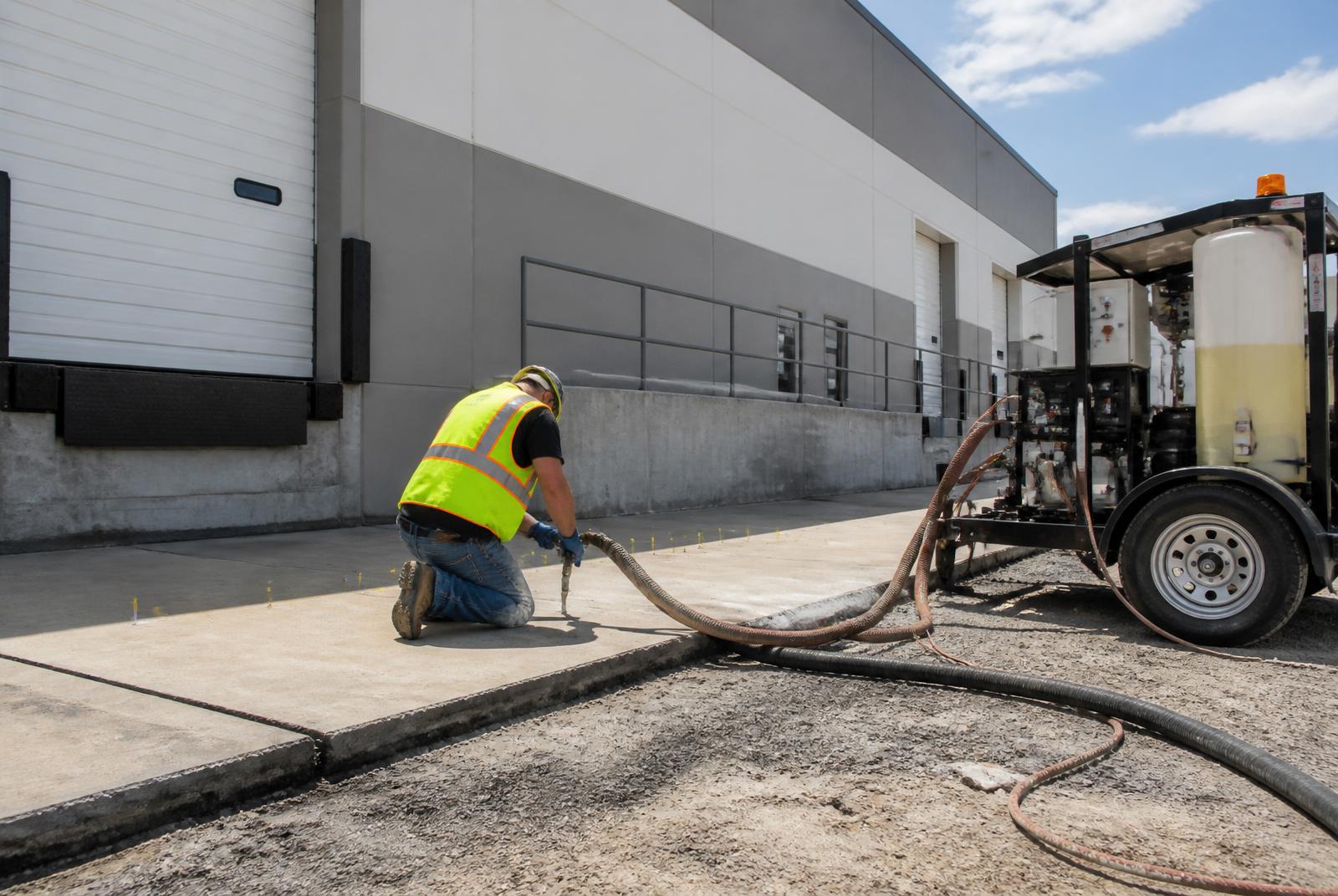
Illustrative project template. This case study documents the type of project we perform and the process we follow in this market. It is not a specific past customer's job — no customer names, testimonials, or outcomes are represented. Placeholder sections marked below will be replaced with real project photos and details as completed jobs are documented.
Local context
Post Falls, ID
Representative project location: near Prairie Ave and Highway 41.
- Nearby landmarksQ'emiln Park, Falls Park, Treaty Rock Park
- Typical soilPost Falls sits on the Rathdrum Prairie aquifer — coarse outwash gravel and sand with pockets of finer silt subject to washout.
- DrainageMeltwater and roof runoff feeding under the garage apron through the aggregate base.
- Freeze/thawPost Falls winters produce sustained freezes that lock frost into the outer edge of interior slabs before they thaw and settle.
Project overview
What this project represents.
This project documents the type of interior garage slab settlement that shows up in Post Falls after 8–12 years: the slab drops at the overhead door line as water finds a path under the exterior apron and washes out the aggregate base.
Foam was injected through 5/8-inch ports drilled directly through the interior slab. The floor was lifted flush with the garage door track in a single afternoon. Vehicles were parked back in the garage the same evening.
The problem
What the homeowner was seeing.
- The interior garage slab had dropped approximately 3/4 inch at the overhead door line relative to the rest of the floor.
- The garage door bottom seal no longer touched the slab evenly, letting cold air, dust, and small critters into the garage.
- The homeowner had noticed water intrusion at the door line during heavy rain events.
Inspection findings
What the on-site walkthrough showed.
- Interior slab elevations taken with a laser at 2-foot intervals from the door line to the back wall.
- The drop was localized to the front 8 feet of the garage — the back of the slab was stable.
- Void probing at the door-line joint confirmed a 1–2 inch void under the settled zone.
Cause of settlement
Why this slab moved.
- Coarse Rathdrum Prairie subgrade allows water to move quickly. Repeated intrusion at the apron joint washed fines out of the aggregate base under the door line.
- Winter freeze/thaw locked frost into the exterior apron edge, then released it as the slab settled during spring thaw.
- The garage foundation stem walls stayed stable; only the interior slab lost its support in the front zone.
See a similar issue at your property?
Get a free on-site estimate.
We'll measure the drop, check for voids, evaluate the drainage, and give an honest recommendation — including whether leveling is the right call.
Repair solution
How the slab was lifted.
- 1Injection ports were drilled from inside the garage — no work required outside on the apron.
- 2Foam was staged to fill the void first, then apply gentle lift to bring the door-line elevation flush with the rest of the floor.
- 3Elevation verified at every port. The bottom seal of the garage door was tested by closing the door — full seal restored across the width.
- 4Ports patched with color-matched concrete filler. Homeowner parked vehicles the same evening.
Why polyurethane foam was selected
The right tool for this project.
- The interior garage floor could not be torn out without displacing the homeowner's storage, tools, and vehicles for days.
- Foam cures in minutes — vehicles were back the same day.
- Foam wouldn't wash out the way the original aggregate fines did.
- Injection ports are small and easily patched — the finished garage floor looks nearly identical to before.
Repair timeline
Start to finish.
Estimate
20–30 minute on-site walkthrough — inside the garage only.
Scheduling
Typical booking window of 1–2 weeks.
Repair day
Roughly 3 hours on-site.
Return to service
Vehicles the same evening.
Estimated project size
Approximately 160 sq ft — the front zone of a two-car garage floor.
Expected lifespan
Polyurethane fill is inert and stable. With the apron joint sealed and drainage corrected, the lift is expected to hold for the remaining life of the slab.
Maintenance recommendations
How to make the repair last.
- Reseal the exterior apron joint every 2 years to prevent future washout.
- Verify garage door bottom seal contact each fall before winter.
- Extend any downspouts within 6 feet of the garage away from the apron.
Project photos
Placeholders for real project imagery.
Each slot below will be replaced with a real photo from an actual completed job. Placeholder cards are clearly labeled so nothing on this page implies a fabricated outcome.
Placeholder — Before Photo
Settled slab before repair — replace with the real before photo from the completed job.
Placeholder — After Photo
Slab lifted flush after polyurethane injection — replace with the real after photo.
Placeholder — Close-up Detail
Close-up of the joint or trip edge — replace with the real close-up.
Placeholder — Injection Process
Injection port and lift in progress — replace with the real process photo.
Placeholder — Finished Result
Finished slab, cleaned and re-opened for use — replace with the real finished photo.
Frequently asked questions
Questions we hear on projects like this.
- Do I have to move everything out of the garage?
- Only the front bay area needs to be clear. Storage and shelving toward the back of the garage can stay in place.
- Will my epoxy floor coating survive the injection?
- The ports themselves need to penetrate the coating and are patched afterward — the patch is visible if the coating is a solid color. We coordinate with the homeowner before drilling so the appearance is understood in advance.
- Can I park a heavy vehicle on the floor the same day?
- Yes — foam reaches roughly 90% of its cure strength within 15 minutes. Same-day vehicle traffic is standard.
- Why not just replace the front section?
- Replacing a section of interior slab requires demolition, dust control, and 5–7 days of cure time — plus finding a way to tie the new pour into the existing slab. Leveling with foam skips all of that.
- What if the settlement returns?
- It shouldn't — the polyurethane doesn't wash out and the aggregate base is now sealed off. If additional settlement ever developed, targeted re-injection is straightforward.
Related resources
Learn more before you request an estimate.
- Service · Garage Floor Leveling
- Cost Guide · Garage Floor Leveling Cost in Spokane
- Problem · Why is my garage floor sinking?
- Comparison · Concrete Leveling vs. Concrete Replacement
- Service Area · Post Falls Service Area
- Learning Center · Why Concrete Sinks in Spokane
- Learning Center · How Long Does Concrete Leveling Last?
- Project Library · All Projects
- Contact · Request a Free Estimate
Free estimate — no obligation
Have a slab that looks like this?
We'll walk your property, measure the drop, and give you a written scope you can compare against any replacement bid.