Illustrative Example: A 1½-Inch Driveway Lift, Explained Step by Step
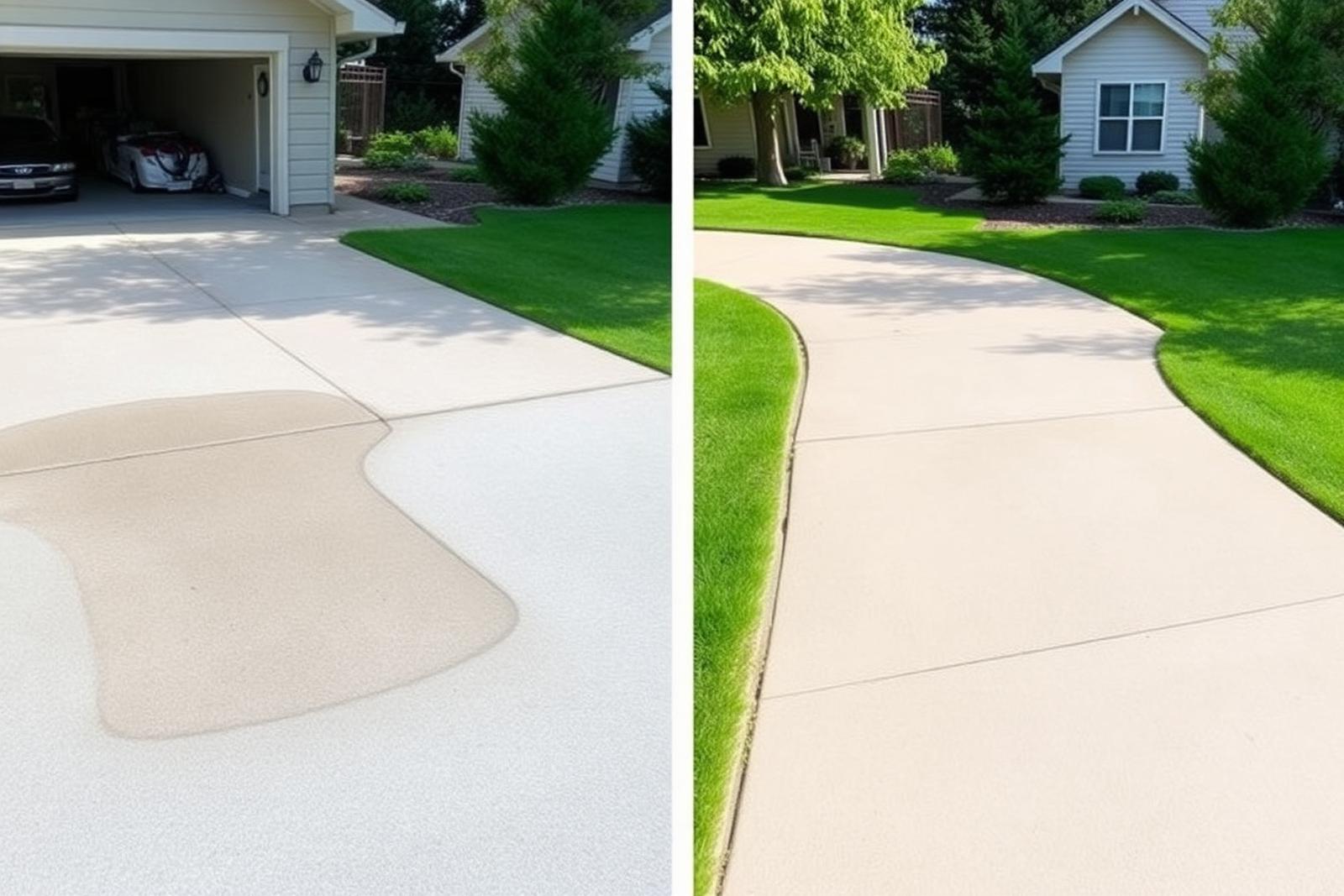
This is an illustrative walkthrough — not a documented Spokane customer project — showing how a typical settled residential driveway is lifted with polyurethane foam and what a homeowner can generally expect.
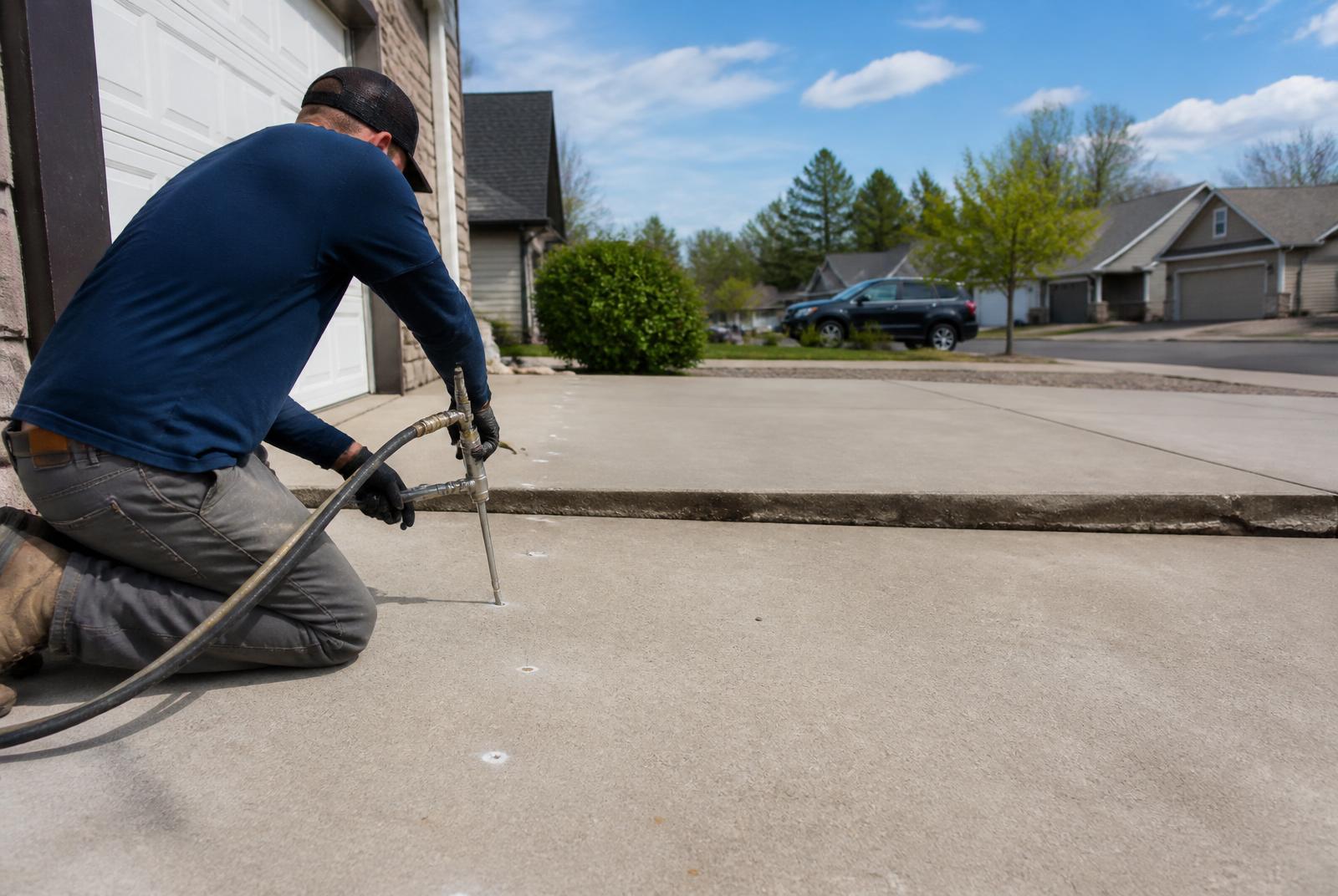
This article is an illustrative example, not a documented Spokane customer project. The scenario below is written to help homeowners understand how a typical residential driveway lift is planned and performed — the sequence, the tools, and the reasonable expectations. Any specifics (measurements, port counts, timing, price ranges) are provided as generalized industry norms.
The Scenario
Picture a residential driveway on a typical Spokane property. The slab near the garage apron has settled roughly 1½ inches, and water is pooling toward the foundation after rain and snowmelt — a warning sign covered in why water is pooling on your driveway. The concrete itself is structurally sound: hairline cracking along a control joint, no spalling, no crumbling. Two replacement quotes came in over $12,000 each.
Because the concrete is still in good shape, this is exactly the kind of slab that concrete leveling is designed for — the trade-offs between lifting and replacement are covered in concrete leveling vs. concrete replacement.
How a Lift Like This Would Typically Be Performed
1. On-site assessment
A technician measures the offset, checks slab thickness, looks for voids underneath, and identifies the drainage cause — often a downspout dumping directly onto the driveway edge. See downspouts and slab settlement for the most common culprit.
2. Drilling injection ports
Small dime-sized ports (typically 5/8 inch) are drilled through the slab in a pattern matched to the void — often four to eight ports for a two-car apron section.
3. Injecting polyurethane foam
Structural polyurethane foam is injected in controlled bursts. As the foam expands, it fills the void beneath the slab and gently raises the concrete back toward its original grade. Contrast with older methods in polyurethane foam vs. mudjacking.
4. Sealing and cleanup
Ports are sealed with color-matched patching. Control joints along the lift area are resealed. A driveway can typically be driven on the same day, because foam cures in minutes rather than hours.
What a Homeowner Can Reasonably Expect
- On-site time for a project this size: often two to four hours
- Total invested: typically a fraction of a full replacement
- Written warranty on the lifted area
- Same-day return to service in most cases
For longevity expectations, read how long does concrete lifting last?.
Get a Real Estimate for Your Slab
Every driveway is different — the soil, the drainage, the settlement pattern, and the concrete's own condition all matter. Homeowners across Spokane and the surrounding area can request a free on-site assessment to find out whether their driveway is a good candidate for lifting or whether replacement is more appropriate.
Think Your Concrete May Qualify for Lifting?
Free on-site inspection · Fixed written quote · No obligation
Related services
Get a local estimate
Lift it — don't replace it.
Have questions about your concrete? Need advice? Want a free estimate? We're here to help. Concrete leveling saves the slab you already have, at a fraction of the cost of replacement.
- Often less costly and less disruptive than tear-out and replacement
- Repair before replacement when appropriate
- Modern concrete lifting methods
- Clear recommendations — no pressure, no upsells
Free Estimates · Spokane-Focused Service · Clear Recommendations